Best WordPress themes for food blogs
So you’ve perfected your sourdough starter, your plating is a work of art, and your camera roll is full of mouth-watering food photos. You’ve got the passion. You’ve got the content. But when you look at your blog, it just feels clunky.
Finding the best WordPress themes for food blogs can feel like searching for the perfect avocado in a supermarket. They all look good on the outside, but you don’t know what you’ve got until you cut it open.
For a food blogger, your site is your kitchen counter, pantry, and recipe box all in one. It needs to be beautiful, functional, and fast. The right theme helps your recipes shine, keeps readers engaged, and supports your SEO.
I’ve tested a lot of themes over the years and narrowed them down to nine that genuinely stand out. Whether you’re starting a new recipe blog or redesigning an existing one, these themes will help your food blog look polished and run smoothly.
Key takeaways
Section titled Key takeaways- Recipe cards with schema are essential. To show stars, cook times, and rich snippets in Google, your theme should support recipe schema or work seamlessly with a recipe plugin.
- Speed matters more than design. Most readers follow recipes on their phone, often while cooking, so choose a lightweight, mobile-first theme that loads quickly.
- Your photos should be the star. Look for themes that highlight imagery with clean layouts, full-width sections, and strong visual hierarchy.
- Your theme is only one piece of the puzzle. Great hosting, good SEO practices, backups, and performance tools all play a role in your blog’s success.
My recipe for rating themes
Section titled My recipe for rating themesBefore we start with the list, here’s how I evaluated each theme. A beautiful design isn’t much use if it’s slow or difficult to manage. I rate every theme on five key metrics, each scored out of 5.
- Recipe-ready: Does it include built-in recipe cards? Does it support schema markup (the code that tells Google it’s a recipe)? If not, does it work well with popular recipe plugins?
- Visual appeal: We eat with our eyes first. Does the theme make your food photos stand out? Is the design clean, modern, and engaging?
- Speed & mobile: How fast does it load? A one-second delay can impact engagement. Is it easy to read on a phone while cooking?
- Ease of use: How simple is it for non-technical users to set up? Can you recreate the demo layout without complex configuration?
- Monetization: Does it support growth? Look for WooCommerce compatibility, ad placements, and flexible layout options.
A theme is only one piece of your site’s performance puzzle. You’ll still need good hosting, proper SEO setup, fast image delivery, and a dependable backup solution like UpdraftPlus to protect your work. If you want to take things further, check out our guide to the best CDN plugins for WordPress to improve loading speeds even more.
Changing themes? Back up first
Switching WordPress themes can affect layouts, widgets, and custom settings. Before you start experimenting, create a full backup with UpdraftPlus so you can restore your site in minutes if anything doesn’t look right.
Best WordPress themes for food blogs
Section titled Best WordPress themes for food blogsBelow is a list of themes that work beautifully whether you’re a part-time blogger sharing weekend kitchen experiments or you’re building a full-time food blogging career.
1. Foodie Pro
Section titled 1. Foodie ProPremium | Recipe: 4/5 | Visual: 5/5 | Speed: 5/5 | Ease: 3/5 | Monetization: 5/5 | Overall: 4.4 / 5.0
Ideal use case: This is for the serious blogger who wants a rock-solid, professional foundation that will last for years. You want a site that is blazing fast and built on clean code.
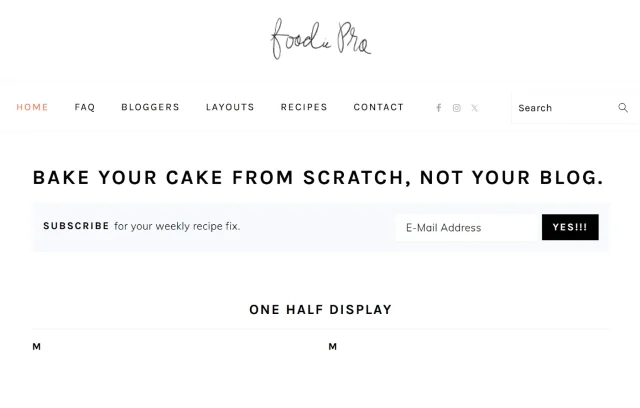
This theme is legendary in the food blog world for a reason. Foodie Pro runs on the Genesis Framework, which is famous for being incredibly fast, secure, and SEO-friendly. It’s the gold standard for professional bloggers.
Key features
- A clean, minimalist, and timeless design that puts your content first
- Atomic Blocks and Genesis
- Blocks support for building custom pages
- Pre-built Recipe Index page template
- Excellent ad space and
- WooCommerce integration
Pros
- Insanely fast and lightweight
- The minimalist design is timeless and professional
- Highly optimized for SEO and monetization
Cons
- The Genesis Framework has a learning curve. It’s not as drag-and-drop as other themes.
Verdict
If you’re willing to spend an afternoon learning how Genesis works, you won’t find a more professional, high-performance theme. It’s an investment in your blog’s future.
2. Cookely
Section titled 2. CookelyPremium | Recipe: 5/5 | Visual: 5/5 | Speed: 4/5 | Ease: 4/5 | Monetization: 4/5 | Overall: 4.4 / 5.0
Ideal use case: The blogger who wants that polished, “food magazine” look without having to build it themselves. It’s for creators who are highly visual and want a stunning homepage.
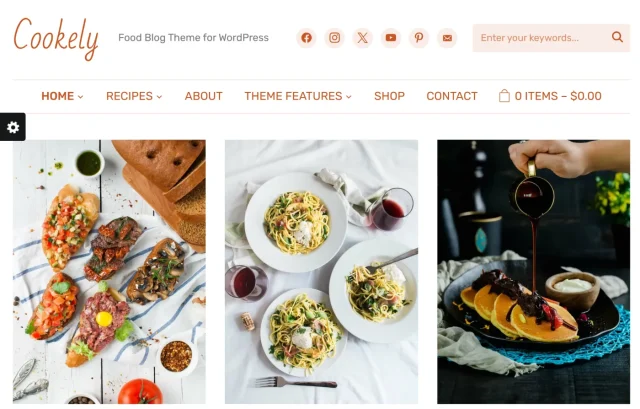
From the team at WPZOOM, Cookely is just gorgeous. It’s a magazine-style theme that looks like a high-end food publication right out of the box. It’s designed specifically for food bloggers.
Key features
- A beautiful homepage slider to feature your best posts
- Comes with their built-in Recipe Card Block for Gutenberg
- “Recipe Index” and “Team” page templates
- Clean, structured layout that is easy to navigate
Pros
- Looks absolutely premium and beautiful with minimal setup
- The built-in recipe card block is excellent
- Great structure for organizing lots of content
Cons
- More feature-heavy than Foodie Pro, so it can be slightly slower if not optimized.
Verdict
Cookely is one of my favorite themes for striking a balance between beauty and function. If your primary goal is to look professional and established from day one, this is a fantastic choice.
3. Astra
Section titled 3. AstraPremium (Freemium) | Recipe: 4/5 | Visual: 4/5 | Speed: 5/5 | Ease: 5/5 | Monetization: 5/5 | Overall: 4.6 / 5.
Ideal use case: The blogger who wants total control over the design. You want to drag-and-drop your way to a custom-looking site without writing a line of code.

Astra isn’t just a food blog theme; it’s a high-performance theme that can be anything you want. It’s one of the lightest, fastest themes on the market, and it’s built to work perfectly with page builders like Elementor or the native WordPress block editor.
Key features
- Incredibly lightweight and fast.
- The core theme is tiny
- Huge library of “Starter Sites,” including several beautiful food blog templates
- Deep integration with page builders, giving you total design control
- Excellent WooCommerce and monetization options
Pros
- Unmatched speed and performance
- Total design flexibility. If you can dream it, you can build it
- The free version is great, and the Pro add-on is a powerful upgrade
Cons
- It doesn’t have built-in recipe cards. You’ll need to add a recipe plugin (which is fine, as plugins like WP Recipe Maker are fantastic).
Verdict
Astra is my top recommendation for “creative control.” Grab the Pro version, import a food blog starter site, and customize it to your heart’s content. It’s the best of all worlds: speed, power, and ease of use.
4. Divi
Section titled 4. DiviPremium | Recipe: 4/5 | Visual: 5/5 | Speed: 3/5 | Ease: 5/5 | Monetization: 5/5 | Overall: 4.4 / 5.
Ideal use case: The visual-first blogger who gets frustrated by code and options panels. If you think in terms of design and layouts, you will love building with Divi.
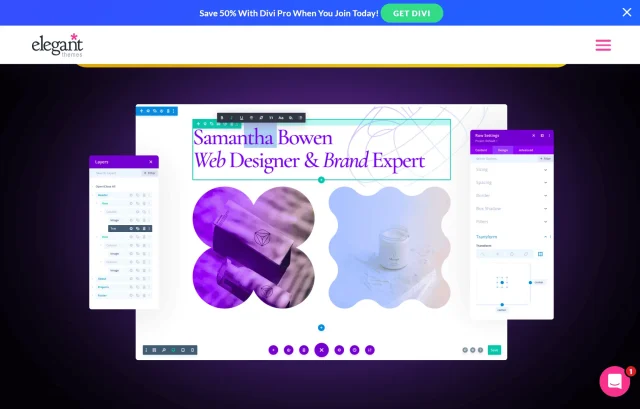
Like Astra, Divi isn’t just a theme; it’s a complete visual website builder. It’s wildly popular because it allows you to build stunning, complex layouts visually. You click on the text and type. You drag a column to resize it. It’s the most “what you see is what you get” experience in WordPress.
Key features
- The industry-leading Divi visual page builder
- A massive library of pre-built layouts, including many for food blogs and restaurants
- Tons of modules (sliders, galleries, forms) built right in
- Part of the Elegant Themes membership, which is a great value
Pros
- The visual builder is intuitive and powerful
- You can create truly unique, beautiful designs
- Incredible value, as you get other themes and plugins too
Cons
- This is its biggest drawback: speed. All those features can make it “heavy” or “bloated.”
- You’ll need good hosting and a caching plugin to make it fast.
Verdict
If you’re a designer at heart, Divi is a dream. Just be prepared to put in a little extra work on the performance side to ensure your site stays fast.
5. Blossom Recipe
Section titled 5. Blossom RecipePremium | Recipe: 5/5 | Visual: 4/5 | Speed: 4/5 | Ease: 5/5 | Monetization: 4/5 | Overall: 3.8 / 5.0
Ideal use case: The blogger who is 100% focused on recipes, especially video recipes. You want all the food-specific features baked right into the theme.
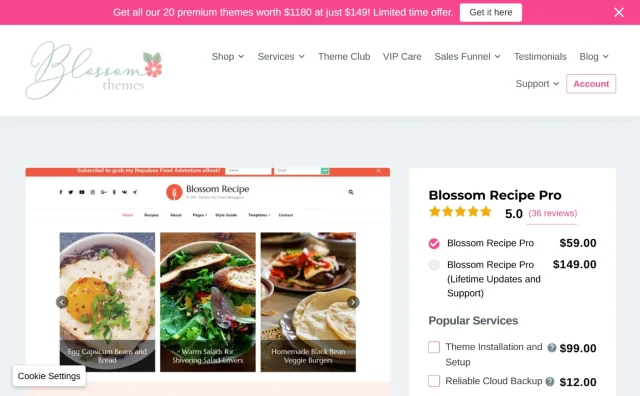
Blossom Recipe is built for one thing: sharing recipes. It’s packed with features that food bloggers need, and its Pro version is a massive step up from its very popular free version.
Key features
- Advanced recipe card with schema and even video support
- A “Print Recipe” button, which your readers will love
- Recipe filter and search system
- Built-in newsletter and ad widgets
Pros
- Packed with every food blog feature you can think of
- Very easy to use and set up
- Excellent recipe card and print functionality
Cons
- The design is lovely, but not as “premium” or minimalist as Foodie Pro.
Verdict
This is perhaps the most functional food blog theme on the list. It’s less of a blank canvas and more of a fully-equipped kitchen. If you want to just start publishing recipes without fussing with plugins, this is for you.
6. Kale
Section titled 6. KaleFree (Pro available) | Recipe: 3/5 | Visual: 4/5 | Speed: 4/5 | Ease: 5/5 | Monetization: 2/5 | Overall: 3.6 / 5.0
Ideal use case: The brand-new blogger who wants something beautiful, simple, and free.
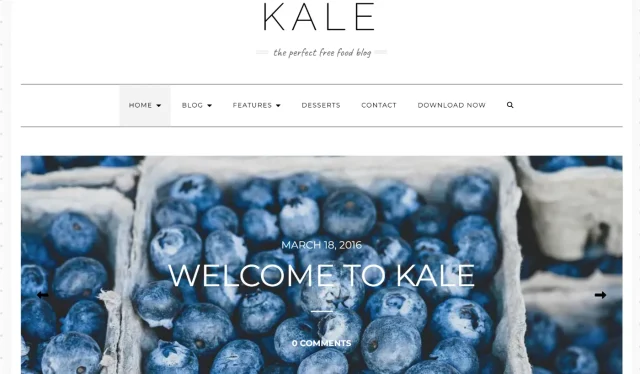
Kale is one of the most popular free food themes for a reason. It’s clean, minimalist, and elegant. It gives your blog a beautiful, simple look that lets your photography shine.
Key features
- A clean and simple design with beautiful fonts
- Homepage features a slider and featured posts
- Easy to set up
- Plays nice with most recipe plugins
Pros
- Gorgeous, minimalist design that looks premium
- Super easy to get started
- The “Pro” version is a great upgrade path
Cons
- You must add a recipe card plugin. It has no built-in recipe features.
- Monetization options are very limited in the free version.
Verdict
This is my top recommendation for a free theme. It’s simple, it’s beautiful, and it lets you focus on your content. Just add a plugin like WP Recipe Maker and you’re good to go.
7. Foodica Lite
Section titled 7. Foodica LiteFree (Pro available) | Recipe: 3/5 | Visual: 4/5 | Speed: 4/5 | Ease: 4/5 | Monetization: 2/5 | Overall: 3.4 / 5.0
Ideal use case: The hobbyist blogger who wants a professional-looking blog that can handle a lot of content categories.
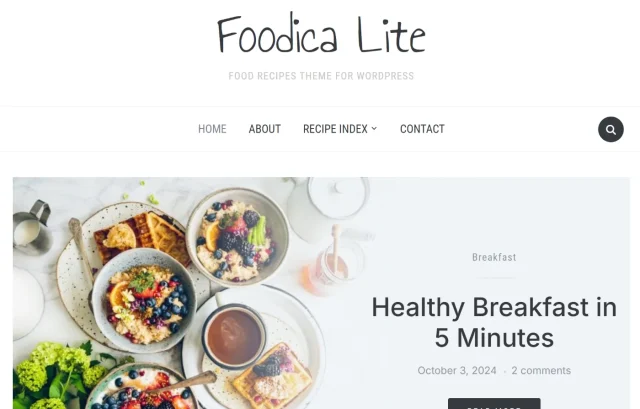
From the same team as Cookely, Foodica Lite is its free sibling. It brings a professional, magazine-style layout to your blog without the price tag. It’s a bit more structured than Kale.
Key features
- Elegant, magazine-style grid layout
- Featured post slider on the homepage
- Gutenberg-ready
- Clear upgrade path to Foodica Pro
Pros
- Looks very professional for a free theme
- The grid layout is great for showcasing many posts
- A solid, well-coded theme
Cons
- Like Kale, it relies on plugins for all recipe functionality.
Verdict
If you find the minimalist look of Kale a bit too simple, Foodica Lite is your answer. It gives you that content-rich magazine feel for free.
8. Neve
Section titled 8. NeveFree (Pro available) | Recipe: 3/5 | Visual: 3/5 | Speed: 5/5 | Ease: 5/5 | Monetization: 3/5 | Overall: 3.8 / 5.0
Ideal use case: The blogger who cares more about speed and performance than anything else. You want the fastest possible site for free.
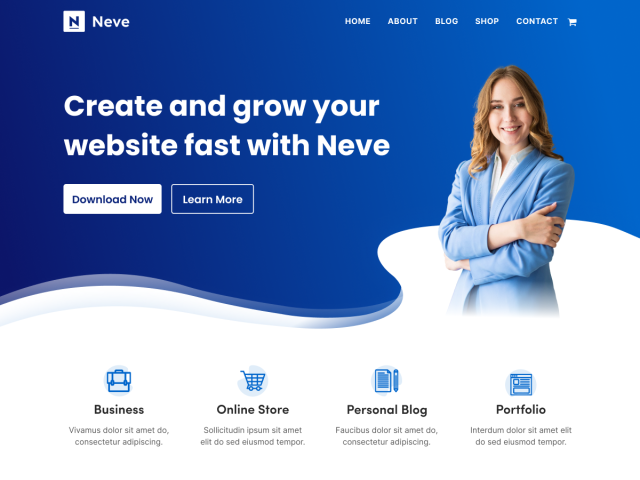
Neve is in the same class as Astra. It’s not a “food theme,” it’s a “blazing fast” theme. It’s built to be as light and fast as possible, which is a huge bonus for Google rankings and user experience.
Key features
- One of the fastest themes in 2026
- Mobile-first design (it was built for mobile from the ground up)
- Integrates with all page builders
- Dozens of free “starter sites” you can import
Pros
- Blazing fast
- Very easy to use, with great starter templates
- Lightweight and bloat-free
Cons
- The default design is very plain (that’s the point). You’ll need to customize it or use a starter site.
- Requires a recipe plugin.
Verdict
You can’t go wrong with Neve. Pair it with a good recipe plugin and a page builder, and you have a “premium” setup for free.
9. OceanWP
Section titled 9. OceanWPFree (Pro available) | Recipe: 3/5 | Visual: 4/5 | Speed: 4/5 | Ease: 4/5 | Monetization: 4/5 | Overall: 3.8 / 5.0
Ideal use case: The blogger who knows they want to build an e-commerce store or sell products from day one.
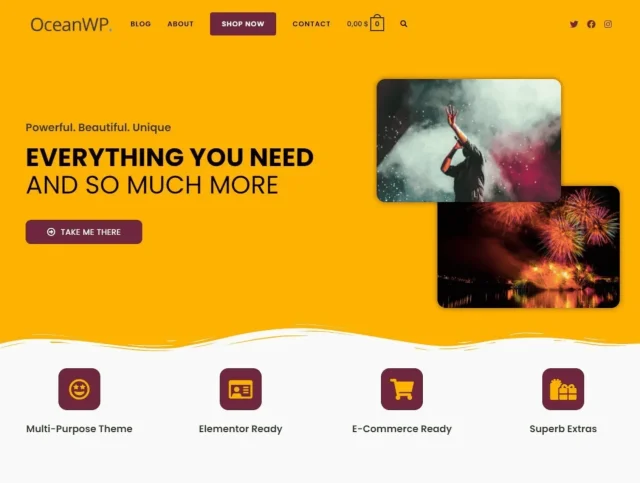
OceanWP is another powerhouse multipurpose theme. Its biggest strength? Deep, deep integration with WooCommerce. If you plan to sell anything, including e-books, courses, kitchen tools, etc – this is your theme.
Key features
- Best-in-class free WooCommerce integration
- Very extensible with a library of free and premium add-ons
- Fast, responsive, and SEO-ready
- Lots of customization options in the free version
Pros
- Unbeatable free e-commerce features
- Highly customizable
- A huge community and lots of tutorials
Cons
- With so many options, it can be a bit overwhelming for a total beginner.
- Requires a recipe plugin.
Verdict
For the budding food entrepreneur, OceanWP is the clear winner. You can start your blog and build a full-featured shop on the same free theme.
Comparison table
Section titled Comparison tableDon’t lose a single recipe
Your recipes are the heart of your blog, so make sure they’re never at risk. UpdraftPlus automatically backs up your entire site and lets you restore everything in one click if anything goes wrong.
What really makes a food blog theme great?
Section titled What really makes a food blog theme great?When you’re shopping, it’s easy to get lost in features. Here’s what you actually need to look for.
1. Recipe cardblocks (with schema)
Section titled 1. Recipe cardblocks (with schema)This is the feature that creates the pretty, formatted recipe box with ingredients and instructions. More importantly, it adds “schema markup” to your page. This is the special code that tells Google, “Hey, this is a recipe!” This is how you get those star ratings, cooking times, and calorie counts to show up directly in the search results. If your theme doesn’t have it built-in, you need a plugin like WP Recipe Maker.
2. A “mobile-first” mentality
Section titled 2. A “mobile-first” mentalityThink about it. When do people use your recipes? When they’re in the kitchen, on their phone, with messy hands. Your theme must be perfectly readable and easy to navigate on a small screen. If they have to pinch-and-zoom, they’ll just leave.
3. Visuals
Section titled 3. VisualsYour photography is your number one selling tool. Your theme needs to showcase your photos, not just contain them. Look for themes with full-width images, beautiful homepage sliders, and elegant gallery options.
4. Room to grow (Monetization)
Section titled 4. Room to grow (Monetization)Even if you don’t plan to make money now, you’ll want the option later. A good theme will have smart widget areas for ads (like in the sidebar or after a post) and will be 100% compatible with WooCommerce for when you’re ready to sell your first e-book.
Conclusion
Section titled ConclusionChoosing a WordPress theme for your food blog can feel overwhelming, but it doesn’t need to be. The best theme is simply the one that makes your recipes easy to share, keeps your site fast, and lets your photography shine.
If you’re starting on a budget, Kale is a great place to begin. If you’re ready for something more flexible, Astra and Foodie Pro are both reliable choices that can grow with your blog.
The most important step is to pick a theme and start publishing. You can always refine your design later, but great content is what keeps readers coming back.
As your food blog grows, protecting your hard work becomes just as important as publishing new recipes. A reliable backup plugin like UpdraftPlus ensures your photos, posts, and years of content are safe from hacks, hosting issues, or simple mistakes.
With automatic backups in place, you can focus on what matters most – creating and sharing recipes, without worrying about losing them.
FAQs
Section titled FAQsWhat is the best free WordPress theme for a food blog?
Top free themes like Kale and Blossom Recipe are excellent starting points. Kale offers a clean, minimalist design, while Blossom Recipe includes built-in recipe cards, which is useful for beginners.
Can I use any WordPress theme for a food blog?
Yes, you can use a multipurpose theme like Astra or Neve. What matters most is speed and mobile usability. If your theme doesn’t include recipe features, you can add a plugin like WP Recipe Maker to handle recipe cards and schema.
What is recipe schema and why is it important?
Recipe schema is structured data that tells Google your content is a recipe. It allows search results to show photos, ratings, cooking times, and other rich details, helping your posts stand out.
Will I lose my recipes if I change my WordPress theme?
No, as long as your recipes are stored in a recipe plugin like WP Recipe Maker. Your content stays separate from the theme. You only risk losing formatting if you rely on a theme’s built-in recipe system.
That said, it’s always smart to backup your WordPress site before switching themes. If anything doesn’t display correctly, you can quickly restore your site and avoid losing time or content.
Are premium food blog themes worth it?
Usually, yes. Premium themes often offer better performance, support, monetization options, and more flexibility. Free themes are great for starting, but premium options can save time and reduce the need for extra plugins.
What’s the difference between a theme and a recipe plugin?
A theme controls your site’s design and layout. A recipe plugin adds functionality like recipe cards, ingredient lists, and schema markup. Most food blogs use both together.
Can I use Elementor or Divi for a food blog?
Yes. Many food bloggers use Elementor, Divi, or the block editor to design layouts. Page builders give you more flexibility, but you’ll still need a recipe plugin to handle recipe data properly.
What’s the most important feature in a food blog theme?
Two things matter most:
- Mobile-friendly design
- Recipe card support (built-in or via plugin)
If you have both, you’re set for a strong food blog foundation.
About the author

Elvira Mishra
Elvira has over four years of experience creating and designing content in WordPress. Her background spans multiple digital disciplines, including marketing, SEO, user experience, and human computer interaction.
Categories
UpdraftPlus
Get all our premium features. Direct site-to-site migration, incremental backups, back up automatically before updates and a whole lot more.
From just $70 for the year.
More stories
-

The Best WordPress plugin to clean up old themes
Unused themes can clutter your WordPress site. Here’s a simple way to remove them safely and keep things tidy.
-

World Backup Day: if your site disappeared, would you be ready?
Take five minutes to make sure your WordPress site is backed up and ready to restore.
-

Best WordPress themes for law firms
Find a professional WordPress theme for your law firm, whether you need speed, flexibility, or a ready-made legal layout.
-

How to secure a WordPress site (without overcomplicating it)
Learn how to secure your WordPress site with simple steps that protect against attacks, strengthen logins, and keep your data safe.